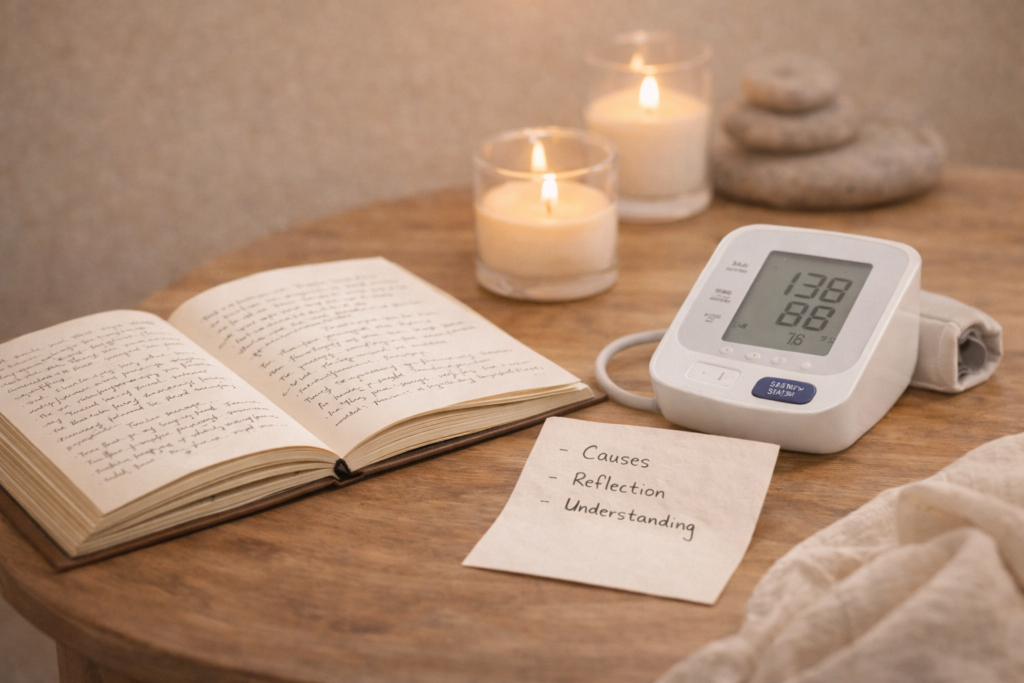
Blood Pressure After 40
By Dr. Tasha · Board-Certified Internal Medicine Physician · 11 min read
You’ve been doing everything you’re supposed to do. Watching what you eat. Trying to exercise. Taking your medication.
And your blood pressure is still creeping up.
Here’s something most people never get told at their doctor’s appointment: high blood pressure after 40 is almost never caused by just one thing. It’s a combination of biological changes, lifestyle factors, and sometimes hidden conditions working together — often without a single obvious symptom.
After 23 years in internal medicine and my own personal experience with elevated blood pressure, I’ve seen every version of this story. The person who does everything right but whose genetics are working against them. The person whose sleep apnea is sabotaging every lifestyle change they make. The woman whose blood pressure started climbing at exactly the same time as her perimenopause symptoms.
Understanding what’s actually driving your numbers is the first step to managing them effectively. In this post, I’m breaking down the 7 most common causes of high blood pressure after 40 — with honest guidance on what you can do about each one.
Related reading: What Is Blood Pressure? · How to Take Blood Pressure at Home · Why Your Blood Pressure Won’t Budge After 40
Key Takeaways
- High BP after 40 is almost always multifactorial — rarely one cause alone
- Arterial stiffening is a normal biological process that starts around 40 and affects everyone
- Undiagnosed sleep apnea is one of the most commonly missed causes — affecting up to 30% of people with hypertension
- For women, declining estrogen during perimenopause removes significant cardiovascular protection
- Some medications — including common ones — raise blood pressure as a side effect
- Elevated BP after 40 is never solely your fault — genetics, biology, and life circumstances all play a role
Why blood pressure rises after 40 — the real picture
I want to address something before we get into the list. When patients come to me with elevated blood pressure, many arrive carrying a weight of guilt — the belief that they caused this through bad choices, that they should have done better, that this is somehow their failure.
Let me be direct: elevated blood pressure after 40 is never just about your choices. It’s genetics. It’s age-related biology that affects almost everyone. It’s conditions like sleep apnea that you may not even know you have. It’s the cumulative effects of decades of stress and life — some of which you controlled, much of which you didn’t.
I’m a physician. I teach this material to medical students. And my blood pressure still climbed. Not solely because of poor choices — because I have a genetic predisposition, because I was managing aging parents and a demanding career, because my body responded to chronic stress in exactly the way bodies are designed to respond.
Understanding the real causes doesn’t excuse inaction. But it does replace guilt with clarity — and clarity is what allows you to take targeted, effective steps forward.
Cause 1: Arterial stiffening — the biology nobody tells you about
Think of your arteries in your 20s like brand-new garden hoses — flexible, elastic, able to expand and contract smoothly with every heartbeat. Now think of what happens to a garden hose left in the sun for a few decades. It becomes stiffer, less flexible, less able to handle pressure changes without resistance.
That’s arterial stiffening. It’s a normal biological process that begins around age 40 and accelerates with each decade. The elastic fibers in your vessel walls gradually break down and are replaced by stiffer collagen. Chronic low-grade inflammation increases, making arterial walls more vulnerable to damage.
Why This Matters
In younger, flexible arteries, a systolic reading of 145 creates manageable stress on vessel walls. In stiffened arteries after 40, that same 145 creates significantly more damage — because the vessels can’t absorb and distribute the pressure effectively. This is why readings that seemed “fine” in your 30s become genuinely concerning in your 40s and beyond.
What you can do: You can’t reverse arterial aging, but you can meaningfully slow it. Regular aerobic exercise, DASH eating, maintaining a healthy weight, and not smoking all support arterial flexibility. This is exactly why lifestyle changes matter so much after 40 — they work with your biology rather than against it.

Cause 2: Hormonal shifts — especially for women
Estrogen is a powerful cardiovascular protector. It helps keep blood vessels flexible, supports healthy cholesterol levels, and has anti-inflammatory effects on arterial walls. During the reproductive years, women generally have lower rates of hypertension than men of the same age.
Then perimenopause begins — typically in the mid-to-late 40s — and estrogen starts declining. That protective effect diminishes. Blood pressure that was well-controlled through your 30s and early 40s can start climbing during perimenopause and often accelerates after menopause.
For Women Reading This
If your blood pressure started rising around the same time as hot flashes, irregular periods, or other perimenopause symptoms — that’s not a coincidence. Your cardiovascular risk profile shifts meaningfully during this transition.
Hormone therapy discussions with your doctor should include cardiovascular considerations. And the lifestyle interventions that support blood pressure — DASH eating, regular movement, stress management, quality sleep — are especially high-value investments during and after this transition.
What you can do: Talk to your doctor specifically about cardiovascular monitoring during perimenopause. If you’re already measuring at home (see how to take blood pressure correctly), track patterns during hormonal changes. The lifestyle interventions in this blog will all be doing double duty during this transition.
Cause 3: Undiagnosed sleep apnea — the silent saboteur
This is the one I want you to pay close attention to, because it’s the most commonly missed cause I see in clinical practice.
Obstructive sleep apnea affects up to 30% of people with hypertension — and most of them don’t know they have it. During sleep apnea, breathing repeatedly stops and starts throughout the night. Each pause in breathing triggers an oxygen drop, a sympathetic nervous system alarm response, and a blood pressure spike. This can happen dozens or even hundreds of times per night.
Warning Signs of Sleep Apnea
- Loud snoring with pauses or gasping
- Waking up gasping or with a dry mouth
- Morning headaches
- Excessive daytime sleepiness despite adequate sleep hours
- Waking frequently to urinate at night
- Blood pressure that’s hard to control despite medications and lifestyle changes — this last one is the clinical red flag
The result of untreated sleep apnea: your blood pressure never gets the nighttime dip it needs for cardiovascular recovery. Research suggests untreated sleep apnea can raise blood pressure by 10 or more mmHg. All the DASH eating and daily walks in the world won’t overcome that.
What you can do: If you recognize yourself in those warning signs, ask your doctor about a sleep study. Treatment — usually CPAP (continuous positive airway pressure) — can produce meaningful blood pressure reductions on its own. Many people see 5–15 mmHg drops just from treating previously undiagnosed sleep apnea. This is not something to manage on your own or delay.
Free Resource
Download the Free DASH Recipe Book
50 blood-pressure-friendly meals — fast, flavorful, and actually doable for real life after 40.
Cause 4: Salt sensitivity — it increases with age
Not everyone’s blood pressure responds the same way to sodium. Salt sensitivity — where sodium intake directly drives blood pressure up — varies dramatically from person to person. Some people can eat high-sodium diets with minimal blood pressure impact. Others see their numbers jump with even modest sodium increases.
Here’s the critical piece: salt sensitivity increases significantly with age. Your arteries stiffen after 40, making blood vessels less able to handle sodium load. What your body managed easily at 30 becomes genuinely problematic at 50. African Americans, people with diabetes, and those with kidney disease tend to be more salt-sensitive — but there’s no simple test to confirm it. Tracking is how you discover your own response.
The Numbers
Most Americans consume around 3,400 mg of sodium daily. The DASH recommendation is 2,300 mg. For maximum cardiovascular benefit, 1,500 mg is the target.
For salt-sensitive people, reducing sodium can produce a 10–15 mmHg drop. For salt-resistant people, the reduction may be smaller — but lower sodium still benefits your kidneys and reduces fluid retention regardless.
What you can do: Test your salt sensitivity by carefully reducing sodium for two weeks while tracking your readings. If your numbers drop meaningfully, sodium is a significant driver for you. Hidden sodium is everywhere — restaurant meals, canned foods, deli meats, condiments. Reading labels becomes a powerful habit.
Cause 5: Chronic stress — it’s physiological, not just psychological
Stress doesn’t just feel bad. It has direct, measurable effects on blood pressure through specific physiological pathways.
Chronic stress activates your sympathetic nervous system — the fight-or-flight response. This increases cardiac output, constricts blood vessels, and raises arterial blood pressure. Stress hormones like cortisol promote sodium retention. Rumination (those 3 a.m. thought spirals) can delay blood pressure recovery after stressful events and sustain physiological arousal for hours.
And here’s what makes it especially insidious after 40: stress doesn’t just raise blood pressure directly. It makes every other healthy change harder to maintain. You can cut sodium while your body is in chronic fight-or-flight mode — but you’re doing it at a fraction of your capacity. You can try to exercise while exhausted and overwhelmed, but it’s not sustainable.
“The cycle: terrified → nervous system stays activated → blood pressure goes up → can’t sleep → stress-eating → too exhausted to exercise → blood pressure stays high → more terrified. This is why addressing chronic stress isn’t optional — it’s the foundation that makes everything else possible.”
What you can do: Stress management techniques — specifically slow breathing practices — have been shown to produce direct blood pressure reductions of 3–5 mmHg, with the American Heart Association formally recognizing breathing techniques as evidence-based complementary interventions. The indirect benefits are even larger: better sleep, more consistent eating, sustainable exercise.

Cause 6: Medications — some common ones raise blood pressure
This is one that often surprises people. Several widely used medications — some of them very common — can raise blood pressure as a side effect. If your blood pressure has worsened around the same time you started a new medication, this connection is worth exploring with your doctor.
Medications That Can Raise Blood Pressure
- NSAIDs (ibuprofen, naproxen) — among the most common culprits, often used daily for arthritis or chronic pain
- Decongestants (pseudoephedrine, phenylephrine) — found in many cold and sinus medications
- Some antidepressants — particularly SNRIs and certain TCAs
- Oral contraceptives — estrogen-containing pills can raise BP in some women
- Stimulant medications — including those used for ADHD
- Some herbal supplements — including licorice root, ginseng, and ephedra
What you can do: Bring a complete medication list to your next appointment — including over-the-counter medications and supplements. Ask specifically: “Could any of these be contributing to my blood pressure?” Never stop a prescription medication without your doctor’s guidance, but this conversation is worth having.
Cause 7: Genetics and family history — biology isn’t destiny
My grandmother died of a stroke at 63. My mother has managed elevated blood pressure for decades. I have a prescription in my purse.
Family history is a real and significant risk factor for hypertension. If one or both parents had high blood pressure, your risk is substantially higher. If a first-degree relative had a stroke or heart attack before 65, that family history changes your cardiovascular risk profile in ways that matter to your doctor.
But here’s what I tell every patient carrying this weight: genetics is not destiny. The research that established how dangerous elevated BP is after 40 also proved that prevention and intervention work. The same genetic predisposition that put me at risk also responds — powerfully — to the right lifestyle changes.
What This Means Practically
Strong family history means you likely need to be more proactive and more consistent than someone without that history — not more extreme, just more consistent. It also means you may need medication alongside lifestyle changes, and that’s not failure. It’s comprehensive care tailored to your individual biology.
My grandmother didn’t have the information available today. You do. That changes everything.
What you can do: Know your family history in detail and share it with your doctor. Start home monitoring earlier if your family history is significant. Treat the lifestyle interventions as non-negotiable rather than optional — they matter more, not less, when genetics are working against you.
One more: kidney function — worth a conversation with your doctor
The kidneys play a central role in blood pressure regulation — they control fluid balance and filter the blood. When kidney function declines (which can happen gradually and silently), blood pressure often rises as a result. Conversely, long-term elevated blood pressure damages the kidneys. It’s a cycle that can accelerate without obvious symptoms.
This isn’t meant to alarm you — most people with high blood pressure don’t have significant kidney disease. But kidney function testing (a simple blood test measuring creatinine and GFR) is a standard part of hypertension evaluation for good reason. If you haven’t had kidney function checked recently, that’s worth discussing at your next appointment.
Your Next Steps
What to bring to your next doctor’s appointment
- Your home BP log with morning and evening readings (two weeks minimum)
- A complete medication list — prescriptions, OTC medications, and supplements
- Your family history — parents, grandparents, siblings, and any cardiovascular events before 65
- Questions about sleep apnea screening if you have any of the warning signs above
- A request for kidney function testing if it hasn’t been done recently
Next up: Now that you understand what’s driving your numbers, the next post covers the DASH diet — the single most evidence-backed eating approach for blood pressure management, and how to start it without overhauling your entire life at once.
Frequently Asked Questions
Can high blood pressure after 40 be reversed without medication?
For some people, yes — particularly those with Stage 1 hypertension (130–139/80–89) and no significant underlying conditions. Research shows that combined lifestyle interventions can produce 10–20 mmHg reductions over 6–8 weeks, which is comparable to a single medication for many people. For others, especially those with strong genetic predisposition, Stage 2 hypertension, or underlying conditions, medication alongside lifestyle changes is appropriate and not something to resist. The goal is optimal cardiovascular health — not avoiding medication at any cost.
Why did my blood pressure suddenly spike when I’ve always been normal?
Several things can trigger a sudden rise: a new medication, significant weight gain, a major stressor or life change, undiagnosed sleep apnea worsening, or hormonal changes (particularly perimenopause in women). A single elevated reading isn’t necessarily cause for alarm — but consistent elevated readings over two weeks warrant a conversation with your doctor. Make sure you’re measuring correctly at home and bring those numbers to your appointment.
Is high blood pressure after 40 more dangerous than at younger ages?
In general, yes — primarily because of arterial stiffening. The same blood pressure reading creates more cardiovascular strain in stiffened arteries than in flexible young ones. The arteries are less able to absorb and distribute pressure effectively, making elevated readings more damaging after 40 than they would have been in your 30s. This is why the thresholds for “normal” blood pressure are now tighter than they used to be.
Can stress alone cause high blood pressure?
Acute stress causes temporary blood pressure spikes that resolve when the stressor passes. Chronic stress — sustained activation of the stress response over months or years — is associated with persistently elevated blood pressure through the physiological pathways described above. However, stress is rarely the only cause. It typically amplifies other underlying factors (genetics, arterial stiffening, poor sleep) rather than acting entirely alone.
My parent had a stroke. Does that mean I will too?
Family history increases risk — it doesn’t determine outcome. What your parent didn’t have access to is the level of understanding, monitoring tools, and evidence-based interventions available today. Home blood pressure monitoring, the DASH diet, evidence-based stress management, sleep optimization, and appropriate medication when needed have all been shown to significantly reduce cardiovascular risk even in people with strong family history. Genetics loads the gun — consistent daily choices determine whether it fires.
Understanding your why changes everything
High blood pressure after 40 is rarely simple, and it’s almost never your fault alone. It’s biology, genetics, hormones, life circumstances, and sometimes conditions you didn’t even know you had — all compounding each other.
But understanding the specific factors driving your numbers gives you something much more valuable than a generic “eat better and exercise more” prescription. It gives you a targeted starting point. A real reason to investigate sleep quality if you’re exhausted and your numbers won’t budge. A reason to review your medication list. A reason to have a different conversation with your doctor at your next appointment.
Clarity isn’t just reassuring. It’s actionable.
Your next calm step
Download the Free DASH Recipe Book
50 blood-pressure-friendly meals to start eating for your heart — tonight.
Board-Certified Internal Medicine Physician · 23+ years clinical experience
Sources & References
Whelton PK, et al. 2017 ACC/AHA High Blood Pressure Clinical Practice Guideline. Journal of the American College of Cardiology. 2018;71(19):e127–e248.
Somers VK, et al. Sleep Apnea and Cardiovascular Disease. Journal of the American College of Cardiology. 2008;52(8):686–717.
Brook RD, et al. Beyond Medications and Diet: Alternative Approaches to Lowering Blood Pressure. Hypertension. 2013;61(6):1360–1383.
American Heart Association. Understanding Blood Pressure Readings. heart.org. Accessed 2025.
|
Medical Disclaimer
The information provided in this article is for educational and informational purposes only and is not intended as medical advice, diagnosis, or treatment. This content should not be used as a substitute for professional medical advice, diagnosis, or treatment. Always seek the advice of your physician or other qualified health provider with any questions you may have regarding a medical condition, including high blood pressure (hypertension). Never disregard professional medical advice or delay seeking it because of something you have read on this blog. If you think you may have a medical emergency, call your doctor or 911 immediately. The author is a board-certified physician, but this blog does not create a doctor-patient relationship. Individual results may vary, and the lifestyle interventions discussed may not be appropriate for everyone. Always consult your healthcare provider before making any changes to your diet, exercise routine, or medication regimen. |